
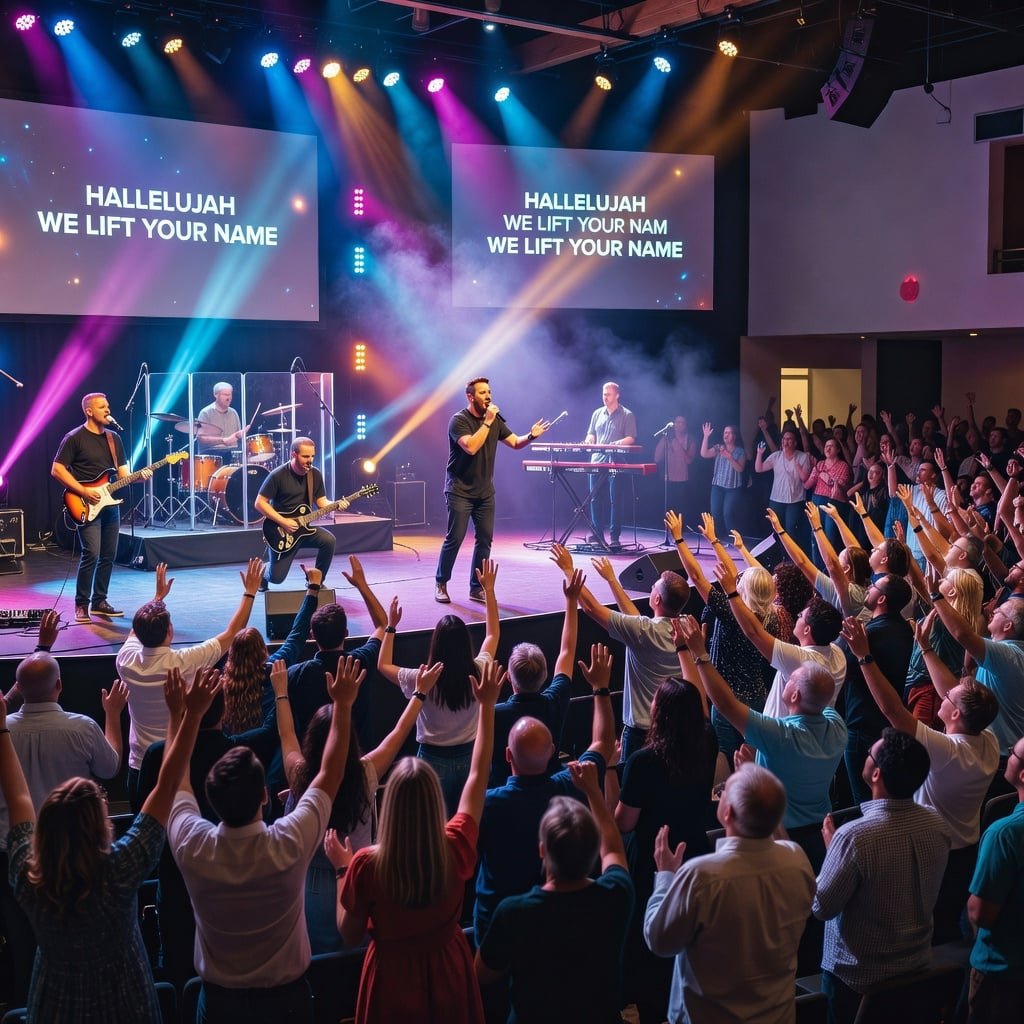
A Letter to Pastors and Church Leaders
Dear Pastor,
First, thank you for your heart for worship. I understand why many churches use strong music volumes. Louder music can increase energy and engagement, create a sense of unity, and help mask distractions in the room. Your desire is to help people connect with God, and that is a wonderful goal.
I do not write this letter lightly. As an ear surgeon who has spent years caring for patients with hearing loss—and as someone who has personally experienced the consequences of acoustic injury—I would not be writing to you if I did not believe this issue was important. My goal is not to criticize worship practices, but to help protect the hearing of the people God has entrusted to your care.
However, our understanding of hearing damage has changed dramatically in recent years. What many people—including hearing professionals, OSHA, and NIOSH—once believed about safe listening levels is now being challenged by new research.
Traditionally, hearing loss was defined by "visible" changes on the audiogram, indicating that sensory hair cells in the inner ear had been damaged. This was primarily a sound- detection problem.
Recent studies have uncovered a condition known as cochlear synaptopathy, often referred to as Hidden Hearing Loss because the damage appears "invisible" on a standard hearing test. The hearing loss is more subtle. You can hear, but you have an understanding problem.

The issue is not the sensory cells themselves—they still work. The problem is damage to the connections between the ear and the hearing nerve. Fewer connections mean a degraded signal, like having fewer pixels in a picture. It is a loss of the "color" or "flavor" of sound.
Imagine going from a high-definition color television to a 1960s black-and-white TV. The picture is still there, but much of the detail is gone.
People with Hidden Hearing Loss may still pass a standard hearing test because they can detect sounds. However, they gradually lose the ability to distinguish sounds clearly—especially speech in noisy environments. Words become camouflaged by background noise, and many people do not recognize the problem until significant damage has already occurred.

When we think about hearing loss, we often picture the elderly. And indeed, we need to protect the vulnerable babies and grandparents. But the people I worry about most are the young adults, parents, teenagers, and children sitting in our congregations today. They are unknowingly depleting the hearing reserves they are depending upon for the rest of their lives. Every unnecessary exposure can silently chip away those reserves.
The older adults in our churches remind us of what is at stake. Many would give anything to hear their spouse more clearly across the dinner table, follow conversations in noisy restaurants, understand sermons more easily, or hear their grandchildren's voices without struggle. The hearing difficulties they experience today did not begin yesterday. They accumulated gradually over a lifetime. The decisions we make now affect whether the next generation experiences the same struggle.
A Quarter Turn. That would be our very prayerful and humble request. Would you consider asking God about protecting your flock by turning the volume down just a quarter turn?
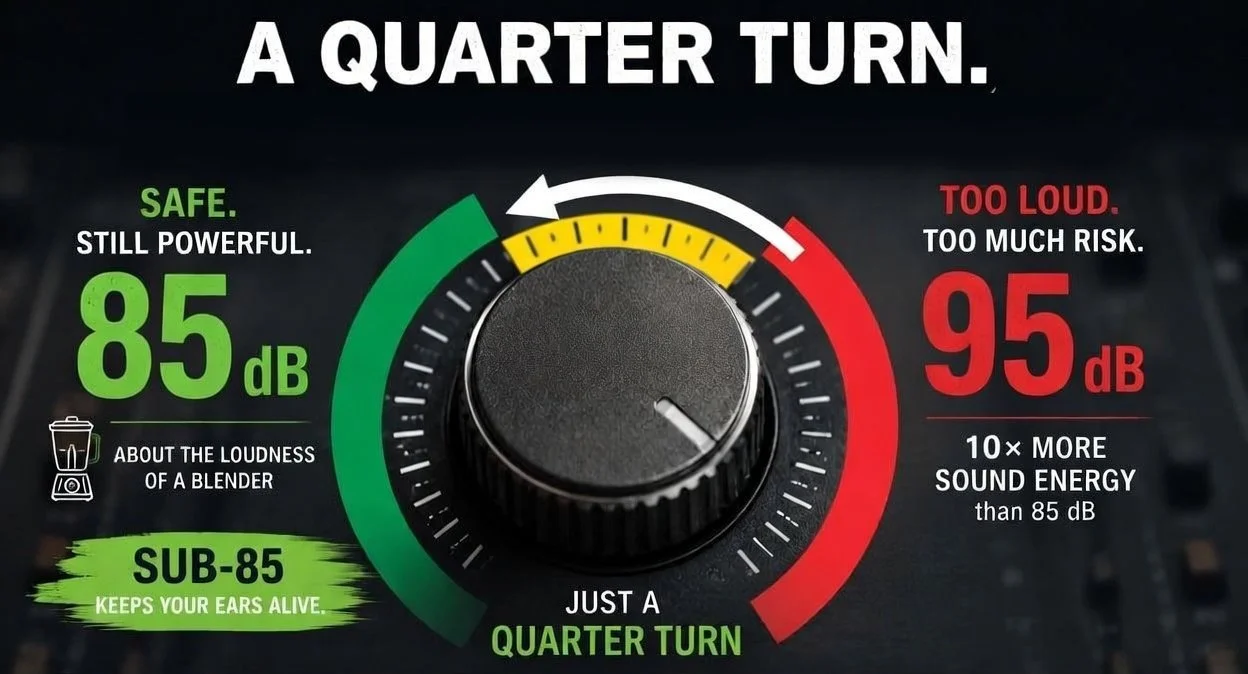
A small reduction can make a tremendous difference. Our simple message is:
"Sub-85 keeps your ears alive." Below 85 dB is considered a relatively safe long-term listening level. For perspective, 85 dB is roughly the loudness of a blender. It is still plenty loud enough to create engagement and excitement in worship.
Above 85 dB, neurotoxins begin to accumulate in the inner ear over time. That is why sound levels above 85 dB are regulated by occupational safety standards and accompanied by increasingly shorter exposure limits. OSHA begins hearing conservation measures at 85 dB and requires additional protective measures at higher exposure levels.
Our prayerful recommendation is simple: keep worship powerful, but keep it under 90 dB whenever possible—and ideally under 85 dB.
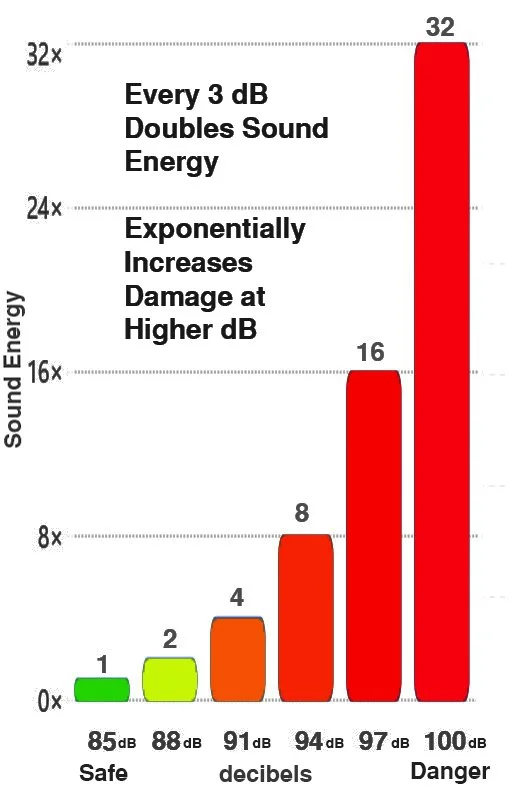
Remember that every 3 dB increase doubles the sound energy reaching the ear. While 88 dB contains twice the sound energy of 85 dB, and 91 dB contains four times as much, most people can barely perceive the difference. In other words, our ears don’t know when we are receiving significantly more dangerous acoustic exposure. And because this damage is not painful, there is often no warning that anything harmful is occurring.
I would also encourage pastors and worship leaders to consider a simple analogy. Loudness can be a bit like salt. The more salt we consume, the more salt we often feel we need. Over time, our tastes adapt. What once seemed perfectly seasoned begins to feel bland.
Sound exposure can work much the same way. Those who are regularly exposed to high sound levels can gradually become accustomed to them and feel that lower volumes lack energy or impact.
High sound levels can anesthetize your ears' natural warning system. In effect, you remove your own guardrails, making it harder to recognize when the volume has become harmful and harder to turn it down.
Yet many churches that lower their volumes discover that, after a period of adjustment, worship remains just as meaningful, engaging, and Spirit-filled. With God's help, we can choose what is wise rather than simply what has become familiar.
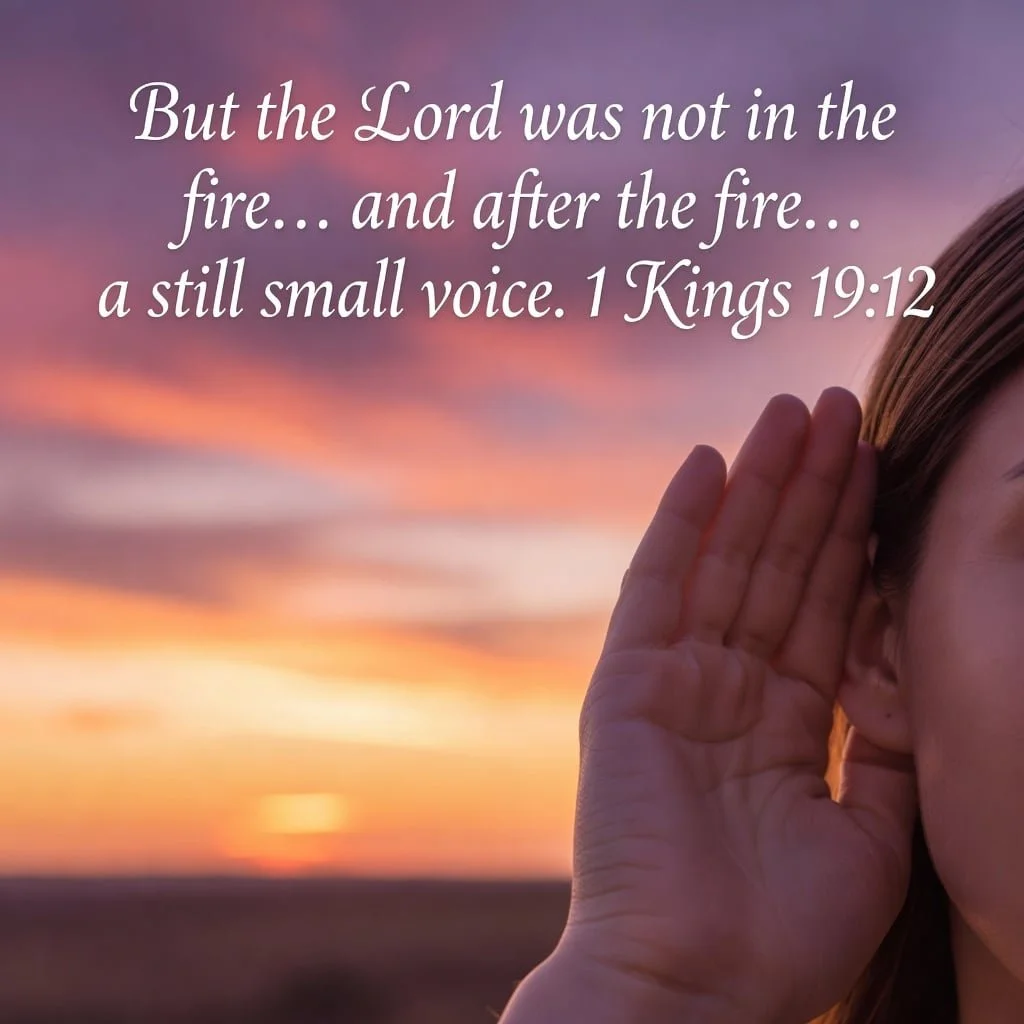
God spoke to Elijah not through the wind, earthquake, or fire, but through a still, small voice. Worship does not lose its power when it becomes safer.
We are not asking churches to eliminate passionate worship. We are not asking churches to remove drums, guitars, celebration, or joy. We are simply asking pastors and worship leaders to prayerfully consider a quarter turn.
If worship can remain powerful, engaging, Spirit-filled, and God-honoring at a slightly lower volume—and if doing so helps protect the hearing of the congregation God has entrusted to our care—is that not worth considering? If you were inadvertently hurting people in your congregation, wouldn’t you want to know?
Thank you for your willingness to think and pray about this issue. May God continue to bless your ministry as you faithfully shepherd His people.
With gratitude and respect,
The EarAware Team. We invite you to become EarAware!
EarAware Recommended Church Sound Level Policy
The purpose of this policy is to promote meaningful, engaging worship while protecting the hearing health of congregants, volunteers, musicians, and staff.
Guiding Principle
The Church seeks to create worship environments that are spiritually impactful while minimizing unnecessary risk of hearing damage. Because hearing injury can accumulate gradually and often occurs without pain or immediate symptoms, sound levels should be managed with long-term hearing health in mind.
Recommended Sound Levels
Strive to maintain an average worship sound level at or below 85 dBA LAeq whenever practical.
Avoid sustained average sound levels above 90 dBA LAeq.
Recognize that brief peaks may occur during music, applause, or congregational participation; however, such peaks should not significantly increase the overall average exposure.
Children's and Youth Areas
Children's hearing is especially valuable because they depend upon it for the rest of their lives.
Children's and youth ministry environments should target lower sound levels whenever practical, ideally below 80 dBA LAeq on average.
Special care should be taken to avoid unnecessary high-level sound exposure in these areas.
Hearing Protection
Hearing protection should be readily available for congregants, volunteers, musicians, and staff who desire it.
Individuals with hearing loss, tinnitus, sound sensitivity, hearing aids, cochlear implants, or other hearing-related conditions should be encouraged to use hearing protection as needed.
Measurement and Monitoring
Sound levels should be periodically measured using calibrated sound-level meters or validated monitoring systems.
Measurements should be taken from representative audience locations rather than only at the sound booth.
Philosophy of Worship
The Church affirms that worship is not measured by volume. Powerful, engaging, Spirit-filled worship can occur at sound levels that are both enjoyable and hearing-conscious. The goal is not to reduce passion, celebration, or musical excellence, but to steward the hearing health of the people God has entrusted to our care.
EarAware Guideline
"Sub-85 keeps your ears alive."